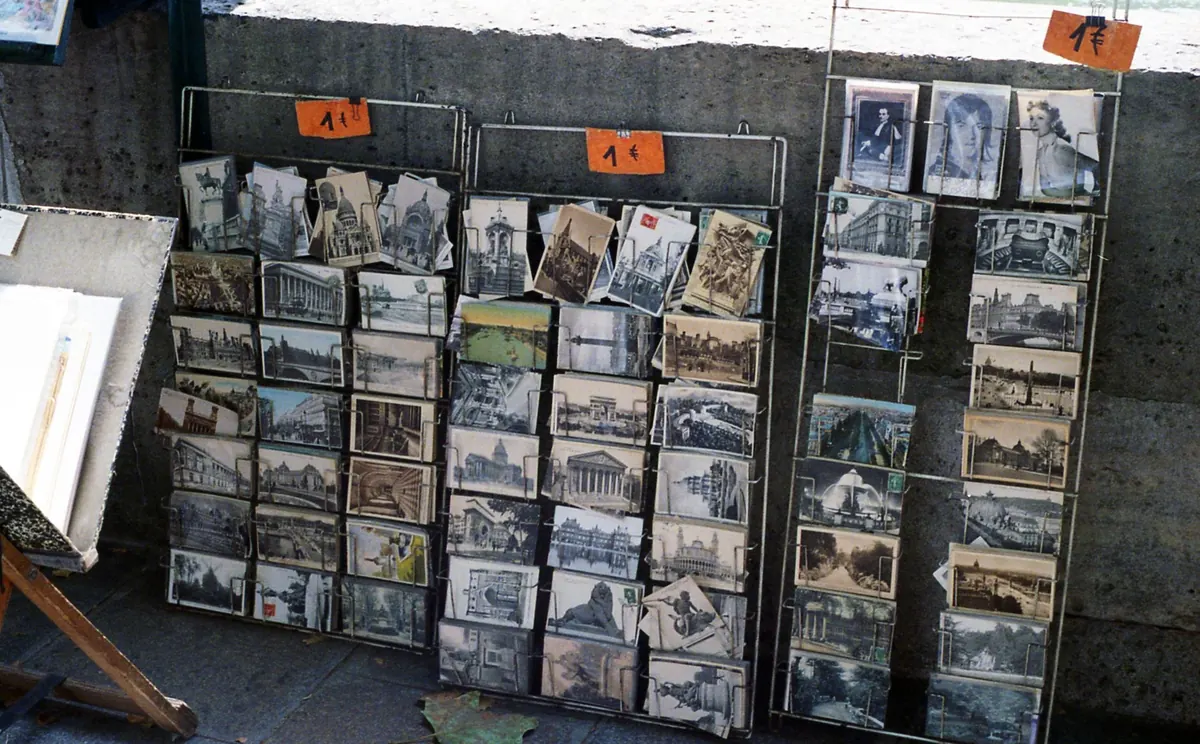
A postcard display works best when it is allowed to change. One card pinned above a desk for three years goes unnoticed; the same card brought out in December, propped beside a sprig of pine, gets read and remembered. The trick is to build a few simple systems — a frame, a line of twine, a binder — that are easy to empty and refill as the calendar turns. What follows are methods that suit holiday greetings and the quieter cards that fill the months between.
Begin with one frame you can empty in a minute
Before you plan a wall, plan a single frame. The best first purchase is something you can open without hunting for a screwdriver: a clip frame, a shallow shadow box, or a plain wooden frame with the backing removed and the card held by two small bull clips. Glass pressed directly onto card can trap damp and flatten texture, so leave a little breathing room, especially for embossed or fabric cards.
A frame with an 18 × 24 cm opening holds one large card or a small cluster of three staggered at slight angles. Keep the arrangement off-centre — a card placed dead centre in a big frame looks like a document, not a decoration. If you would rather not commit to one size, choose a frame with a linen-covered pinboard insert and use map pins; the backing takes pins as often as you like and never shows the holes.
The three-frame rule
Odd numbers settle a wall. Three frames of the same size, hung in a row with 5 cm between them, gives you a display that can hold a matching set — three views of the same coastline, three cards from the same trip — or a deliberate contrast: two winter scenes and one summer photograph. Hang the middle frame first and level the others from it. Before you commit to nails, lay the frames on the floor and photograph the arrangement; it is far easier to move cardboard than plaster.
Garlands: the most flexible wall in the house
A line of jute twine and a handful of small wooden pegs will hold twenty cards and change with the season in ten minutes. Anchor the twine at both ends with a hook or a sturdy pin, and add a third anchor point at the midpoint if the run is longer than about a metre — sagging lines look tired rather than relaxed. Two parallel lines, the upper one holding cards and the lower one holding cards and a little greenery, gives depth without clutter.
The garland also takes decoration better than a frame does. A short length of ribbon at each anchor, a few dried orange slices in December, a sprig of rosemary in spring, a strip of fabric in a colour you have already used elsewhere in the room: these are the changes that make a display feel seasonal rather than static. Run one along a mantel shelf, across the top of a mirror, or down the side of a bookcase where a wall feels too narrow for anything else.
Albums and binders for the everyday cards
Not every card should be on show, and the ones you love most are often the ones you would rather protect. A three-ring binder with page protectors sized for 10 × 15 cm cards is the cheapest, most forgiving archive there is: no mounting, no adhesive, no risk of tearing a corner when you change your mind. Postcard albums with acid-free sleeves do the same job with more polish, and they sit comfortably on a side table where a guest might actually open them.
Keep one small album out as the working display and the rest stored. Twenty or thirty recent cards — the last birthday, the last trip, the note from a neighbour — is enough to feel current. Refill it when it starts to feel familiar, roughly every few months, and move the outgoing cards into the main archive.
A simple rotation calendar for the year
You do not need to redesign a wall every month. A loose rhythm is enough, and it gives you a reason to handle the collection rather than leaving it in a drawer.
- January and February: thank-you notes, winter views, cards that arrived for New Year. Keep the palette cool and the arrangements sparse.
- March and April: spring flowers, Easter greetings, early travel plans. Add something fresh and green to the garland.
- May and June: wedding and graduation cards, first-holiday wishes, city views. This is a good moment to bring out anything with strong colour.
- July and August: seaside cards, mountain views, vintage transport, local festival scenes. Group them by place rather than by date.
- September and October: back-to-school notes, harvest and autumn scenes. Warm tones, deeper frames, slightly denser arrangements.
- November and December: holiday greetings, Advent scenes, New Year cards. This is the one season that justifies a full change of the wall.
Notice what the calendar leaves out: nothing. There is no month that requires an empty wall, but there is also no rule that every card must be out at once. Space between cards is part of the design. A garland with eight cards on it reads better than the same garland crammed with twenty.
Mixing holiday and everyday cards without clutter
The displays that work all year share one habit: they hold on to a few cards that are not seasonal at all. A favourite view, a card from someone no longer here, a postcard you bought yourself on a wet afternoon. Call it an anchor. Build the seasonal display around it rather than clearing the wall entirely, and the room will not lurch from festive to bare in the first week of January.
Two small disciplines keep the mix tidy. First, pick one accent colour per season and let only two or three cards echo it; too many colours and the display becomes a noticeboard. Second, align something — top edges, centre points, or the pegs themselves — so that a varied group still reads as one arrangement. Cards of different sizes look intentional when their top edges sit on the same line, and chaotic when they do not.
Storage that makes swapping easy
The good intentions of a rotating display die in a shoebox. Give each season a shallow lidded box, label the end by month, and keep the pegs, clips and ribbon in the same box as the cards they belong with. When December arrives you open one box, not five.
Photograph an arrangement before you take it down. A phone picture takes five seconds and saves you the frustration of trying to rebuild a composition you liked six months ago. Store cards upright rather than stacked flat if you can; it keeps corners sharp and makes browsing quicker.
Rotate little and often. A single card swapped on the first of the month keeps a display alive far better than a grand rearrangement every December.
Keeping the display fresh
Set aside half an hour at the start of each month. Dust the frames, check that no card has slipped behind another, and move one thing — a new card in, an old one into the album, a different ribbon on the garland. That is the whole maintenance routine, and it is enough.
Two quiet habits will keep the collection growing. Write the date and the occasion on the back of every card you receive, in pencil, before it goes into the album; future you will be grateful. And send one card a month from the same box you display them in, so the wall is not only receiving. A display that empties and refills is a display that stays worth looking at.
Photo: DeltaWorks / Pixabay