The best postcard I ever received was a photograph of a municipal swimming pool in a town I had never heard of. Four lines on the back: the water was cold, the woman at the kiosk sold plum cake, the bus home ran every two hours. Nothing else. I kept it for eleven years.
That is roughly the whole art of it. A postcard is not a short letter — it is a small, specific piece of proof that someone thought of you while standing somewhere else. What follows is how to choose the card, use those few square centimetres well, address it so it actually arrives, and get the postage right the first time.
Choosing a Card Worth Keeping
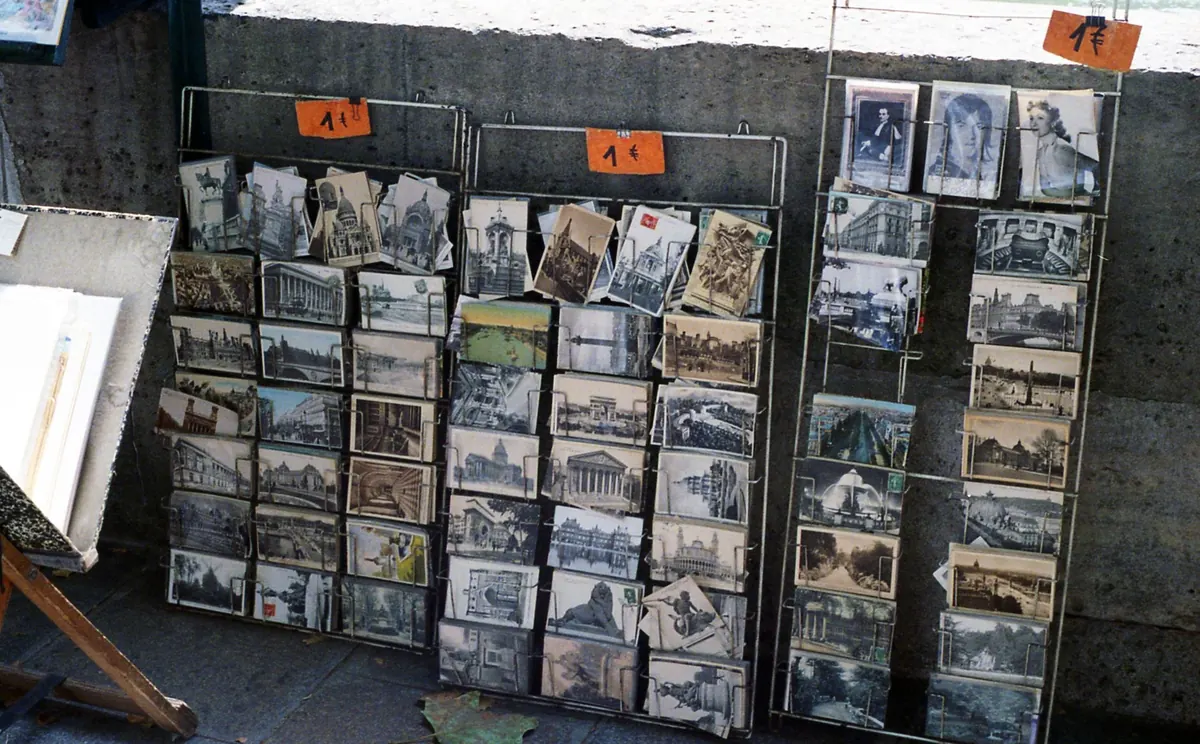
Start with the person, not the place. The rack by the till is full of sunsets that could be anywhere; the card people keep is usually the one that shows a detail — a bus shelter, a fishmonger's slab, the municipal clock tower with one hand missing. If your friend has a dry sense of humour, the ugly cat portrait will do more work than the harbour at dusk.
Two practical things matter more than people expect. First, card stock: a flimsy card warps in the post and the printing scuffs, so choose something with a bit of body. Second, the surface. Glossy cards repel some inks, so test your pen in a corner or use a fine-liner rather than a gel pen, which will smear the moment it meets a damp sorting office.
And buy two. One to send, one to keep, or one for the friend you will inevitably think of while writing the first.
What to Write: Short Messages That Sound Like You
The space is tighter than it looks. Once the address block claims the right-hand side, you have roughly half a card — enough for 30 to 60 words. That is not a limitation to fight; it is the form.
A reliable shape is three moves:
- Where and when. Name the place and the day, because postcards are read weeks later and the date anchors everything. "Thursday, a bench outside the station at Ghent" beats "Greetings from Belgium".
- One specific detail. Not the cathedral; the sound of the cathedral bells practising the same six notes. Detail is what makes a card feel written rather than bought.
- One question. A question turns a card into a conversation and gives your friend something to answer, whether by postcard or by message.
Thursday, waiting for the 6.10 in Ghent. The station café does a cheese sandwich the size of a paperback and the woman behind the counter has opinions about the weather in Lisbon, where her sister lives. Did your tomatoes survive the wind? — J.
That is 52 words and it does everything a postcard can do. Avoid "Having a great time, wish you were here" unless you genuinely mean it and can add the reason. Nothing kills a card faster than the sense that the same sentence went to nine people.
The Etiquette Nobody Explains
Postcards sit in an odd place between a gift and a message, and a few unwritten rules keep them pleasant.
- A card is not an invoice. Nobody owes you a reply. Send the next one anyway, or don't — but don't keep score.
- Write each one individually. If you are sending from a trip, resist the photocopied round-robin. If time is short, send fewer cards with one honest line each.
- Keep bad news off the back. Anyone in a household can read a postcard, and it may arrive days after you sent it. Serious news belongs in an envelope, a call or a letter.
- Sign it. A group card where everyone adds a line but nobody signs is a small cruelty.
- Be discreet. No addresses, health details or anything private about the person receiving it.
If someone sends you a card after a bereavement, a house move or a new baby, a card back is entirely appropriate. For formal thanks — a wedding present, a job reference — a letter or a note in an envelope is the safer choice; a postcard reads as casual, however warm the words.
Addressing, Stamps and the Postal Reality
The address block
Write the address before you write the message. It sounds fussy until the first time you run out of room and have to squeeze the postcode into a corner. Keep the address in the right half of the card, leaving the top left for your message and the top right for stamps.
Set it out over three or four lines: name, street and number, town or city with the postal code, then the country in capital letters if it is going abroad. Use block capitals for anything a sorting machine has to read — a postcode written in a flourish is how cards end up three streets away in April.
Postage and stamps
Rates change and they differ between domestic and international mail, so check the current price at a post office counter or on the operator's website rather than trusting the stamps in a drawer. Two old low-value stamps do not add up to a current one, and an underpaid card is often returned to sender — slowly, or not at all.
Leave a clear margin around the stamp, press it down firmly at the corners, and skip the sticky tape; some postal operators object to it and it makes the cancellation messy. If you want a clean postmark for a collection, ask at the counter for the card to be hand-cancelled.
Get it home
Put your own address in small letters at the top left of the message side. If the card cannot be delivered, that is the only thing that brings it back to you instead of into a bin.
Small Touches That Cost Nothing
Date the card. Draw the shape of the street corner where you are sitting. Underline one word. A tiny map with an X and the words "we are here" is worth more than another paragraph.
Keep it flat and light: no coins, no pressed flowers, no keyrings. Anything bulky can jam sorting machinery, and plant material and currency can cause trouble at customs. If you must send a small extra, put it in an envelope instead.
If you send a run of cards from one trip, number them in the corner — "3 of 6" — so your friend knows a small serial is unfolding and can keep them in order.
Sending From Abroad Without Losing the Card
Buy stamps at a post office rather than from a hotel desk, where they are sometimes sold at a markup and posted in a lobby bag that may sit for days. Use a real postbox on the street, check the collection time printed on it, and remember that international surface mail can genuinely take weeks — a card posted in Portugal in June may land in October.
Air mail stickers are rarely required now that most international mail travels by air anyway, but writing "AIR MAIL" in the corner does no harm and occasionally speeds things along.
A Short Checklist Before the Postbox
- Address written first, in clear block capitals, with the country named.
- Your return address in small letters, top left.
- Date and place somewhere on the card.
- One specific detail and one question.
- Postage checked for this destination and this weight.
- Stamp pressed flat, no tape, no bulk inside.
- Dropped in a real postbox, not left on a reception desk.
Then let it go. It will arrive smudged, slightly bent, perhaps three weeks late, and it will still be the best thing in the pile of bills on the doormat.
Photo: Semevent / Pixabay